How I Finally Learned to Move Freely — A Beginner’s Journey to Better Flexibility
Have you ever struggled to touch your toes or felt stiff getting out of bed? I did — badly. As someone starting from nearly zero flexibility, I discovered that small, consistent moves made a real difference. This isn’t about extreme stretches or instant results. It’s about a practical, beginner-friendly rehab approach that actually works. Let me walk you through how gentle daily habits can quietly transform your body’s mobility — and why you might want to start sooner than later.
The Hidden Cost of Stiffness
Stiffness is often dismissed as a minor annoyance, something that simply comes with age or long days at a desk. But over time, tight muscles and restricted joint movement can quietly erode the quality of everyday life. Imagine reaching for a shoe and needing to pause, brace against the wall, or give up entirely. Picture the discomfort of rising from a chair, the slow, cautious way you move when your body feels like it’s been locked in place. These are not just inconveniences — they are signals. The body is communicating that flexibility, a fundamental component of physical health, is slipping away.
Modern lifestyles are largely to blame. Many adults spend hours seated, whether working at a computer, commuting, or relaxing in front of a screen. This prolonged inactivity leads to shortened hip flexors, tight hamstrings, and stiff shoulders. Muscles adapt to the positions we hold most often, and when those positions involve minimal movement, the body begins to lose its natural range of motion. Over time, this can increase the risk of strain during simple activities, such as lifting a grocery bag or turning to check a blind spot while driving. The consequences extend beyond discomfort — reduced flexibility is linked to poor posture, joint degeneration, and a higher likelihood of falls, especially in middle age and beyond.
What many don’t realize is that flexibility is not just about how far you can stretch — it’s about functional mobility. The ability to bend, twist, and reach without pain supports independence and confidence in daily tasks. For women between 30 and 55, who often juggle work, family, and household responsibilities, maintaining physical ease is essential. When movement becomes effortful, even small chores can feel overwhelming. The good news is that flexibility is not a fixed trait. Like strength or endurance, it can be improved at any age with the right approach. The key is to recognize stiffness not as an inevitable part of aging, but as a reversible condition that responds well to gentle, consistent care.
Why Flexibility Isn’t Just for Athletes
There’s a common misconception that flexibility is only for people who practice yoga, dance, or gymnastics — a skill reserved for the naturally limber or the fitness-obsessed. But in reality, flexibility is a foundational aspect of health that benefits everyone, regardless of activity level. Think about the simple acts that define a day: bending to tie a child’s shoe, lifting a suitcase into an overhead bin, or turning to hand something to a friend in the passenger seat. Each of these movements relies on range of motion in the joints and elasticity in the muscles. Without adequate flexibility, these everyday actions can become awkward, strained, or even painful.
Scientific research supports the importance of maintaining flexibility for long-term well-being. Studies have shown that regular stretching improves circulation, reduces muscle tension, and enhances joint lubrication. Better blood flow means muscles receive more oxygen and nutrients, which aids recovery and reduces soreness. Reduced muscle tension can lead to fewer aches, particularly in the lower back and neck — areas where many women carry stress. Additionally, improved flexibility contributes to better balance and coordination, which are critical for preventing falls as we age. These benefits are not reserved for elite athletes; they are accessible to anyone willing to invest a few minutes a day in their body’s mobility.
Another often-overlooked benefit is the impact of flexibility on posture. When muscles are tight — especially in the chest, hips, and lower back — they pull the body out of alignment. This can lead to a rounded shoulder posture, an exaggerated curve in the lower spine, or a forward head position, all of which contribute to chronic discomfort. By restoring balance through stretching, the body can return to a more natural, supported alignment. This not only reduces strain on the spine but also makes breathing easier and standing taller feel more comfortable. For women managing busy households and long workdays, improved posture can mean less fatigue and greater energy throughout the day.
Sleep quality is another area where flexibility plays a quiet but powerful role. Tight muscles can cause restlessness at night, making it harder to find a comfortable position or stay asleep. Gentle stretching in the evening has been shown to calm the nervous system, signaling to the body that it’s time to wind down. Over time, this can lead to deeper, more restorative sleep — a benefit that ripples into every other part of life, from mood to focus to resilience in the face of daily challenges.
Starting From Scratch: My First Moves
When I first decided to work on my flexibility, I had no idea where to begin. I remember trying to touch my toes and barely making it past my knees, my hamstrings pulling so tight it felt like they might snap. I tried a few online videos, but most moves seemed too intense or required positions I couldn’t safely achieve. I felt discouraged, even defeated. I thought maybe I was too old, too stiff, or just not built for this kind of thing. But then I learned a crucial lesson: flexibility isn’t about how far you can go — it’s about how gently and consistently you move.
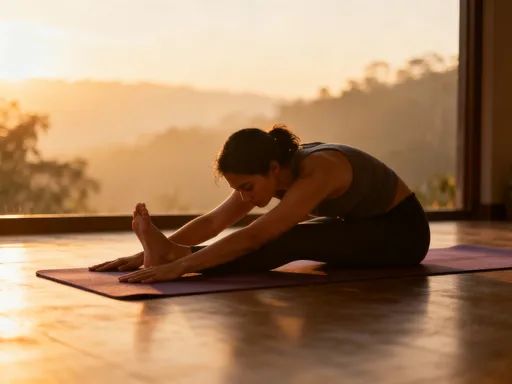
I started over, this time with a mindset of curiosity rather than competition. Instead of pushing into pain, I focused on sensation — a mild pull, a warm feeling in the muscle, a sense of release. I began with seated forward bends, sitting on the floor with my legs stretched out and slowly leaning forward, keeping my back as straight as possible. I didn’t worry about how close my hands got to my feet. I just paid attention to my breath and tried to relax a little more with each exhale. Some days, I could lean forward an inch farther. Other days, I stayed in the same place — and that was okay.
I added shoulder rolls and ankle circles, simple movements that required no special equipment or space. Sitting at my desk, I would roll my shoulders forward and backward, feeling the tension in my upper back begin to melt. Before bed, I would lie on my back and trace small circles with my ankles, warming up the joints and improving circulation in my lower legs. These tiny actions didn’t feel like exercise, but over time, they added up. I noticed I could reach the top shelf without wincing, or turn my head more easily while reversing the car.
The real shift came when I stopped measuring progress by dramatic changes and started noticing small victories. I could put on my socks without sitting down. I could rise from the floor more smoothly. These weren’t grand achievements, but they made daily life easier — and that was exactly the point. Flexibility, I realized, wasn’t about becoming someone else. It was about reclaiming the ease of movement I once took for granted.
Building a Simple Daily Routine
One of the biggest breakthroughs in my journey was creating a routine that fit into my life, not the other way around. I didn’t have time for hour-long stretching sessions, nor did I want to add more stress by forcing myself into complex poses. Instead, I designed two short sequences — one for the morning and one for the evening — each lasting just 5 to 10 minutes. All I needed was a quiet space on the floor and a yoga mat, though a folded towel works just as well.
The morning routine was designed to wake up the body and prepare it for the day. I started with cat-cow stretches on all fours, moving slowly between arching my back and rounding it, syncing each motion with my breath. This gently warmed up the spine and encouraged fluid movement. Next, I moved into a seated forward bend, stretching my hamstrings and lower back. I kept my knees slightly bent if needed and focused on lengthening my spine rather than reaching my toes. Then, I added hip openers — crossing one ankle over the opposite knee and leaning forward slightly to feel a stretch in the outer hip. I held each position for 20 to 30 seconds, breathing deeply and relaxing into the stretch.
The evening routine was more about releasing tension and calming the nervous system. I began with a gentle supine twist, lying on my back and dropping both knees to one side while keeping my shoulders flat on the floor. This eased tightness in the lower back and hips. I followed with a figure-four stretch, similar to the seated hip opener but done lying down, which many find more accessible. Finally, I ended with neck and shoulder rolls, using slow, deliberate movements to loosen areas where stress tends to accumulate. Throughout each stretch, I reminded myself to **breathe into the stretch** — inhaling deeply and exhaling to let go of tension.
The key to this routine’s success was its simplicity and consistency. I didn’t need to remember complicated sequences or track progress with measurements. I just showed up, moved gently, and listened to my body. Over time, the routine became a ritual — a moment of care in a day filled with demands. And because it was so manageable, I rarely missed a day. That consistency, more than any single stretch, was what made the real difference.
The Role of Consistency Over Intensity
In the world of fitness, intensity often gets the spotlight — longer runs, heavier weights, faster reps. But when it comes to flexibility, the opposite is true. Progress doesn’t come from pushing harder or holding a stretch until it hurts. It comes from showing up every day, even when you don’t feel like it, and doing a little bit. Flexibility is a slow, quiet process that works on the body’s connective tissues — tendons, ligaments, and fascia — which respond best to regular, gentle stimulation.
When I first started, I made the mistake of trying to force my body to change quickly. I held stretches too long, leaned too far forward, and ended up sore and discouraged. What I didn’t understand then was that connective tissue takes time to adapt. Unlike muscle, which can respond to exercise within days, fascia and tendons require weeks or even months of consistent input to become more pliable. Rushing the process doesn’t speed things up — it increases the risk of strain and setbacks. The body interprets aggressive stretching as a threat, triggering protective tension that actually makes muscles tighter.
What works instead is patience and repetition. By stretching gently every day, even for just a few minutes, you send a signal to the nervous system that movement is safe. Over time, the body begins to relax, allowing for greater range of motion. This is why small, daily efforts are so powerful. You might not notice a difference from one day to the next, but after a few weeks, you’ll find you can bend a little deeper, twist a little farther, or stand up with less effort. These subtle shifts are real progress — and they build the foundation for lasting change.
One way to stay motivated is to track non-scale victories. Instead of measuring how close your hands are to your toes, notice how you feel when you get out of bed, or whether you can play with your children or grandchildren without stiffness. Keep a simple journal, noting how your body responds each day. You might write, “Felt looser after walking,” or “Could reach the back seat without pain.” These observations reinforce the value of your practice and remind you that every small effort counts. Flexibility isn’t about perfection — it’s about presence.
Supporting Flexibility with Lifestyle Tweaks
Stretching is important, but it’s only one piece of the puzzle. To truly improve flexibility, it helps to support your efforts with everyday habits that promote mobility and reduce stiffness. One of the most impactful changes I made was simply moving more throughout the day. Sitting for long periods tightens the hips and weakens the glutes, which can pull the pelvis out of alignment and contribute to lower back pain. I started setting a timer to stand up and walk around every hour, even if just for a minute. These short breaks didn’t disrupt my work — they actually improved my focus and energy.
Hydration also plays a surprisingly important role. Muscles are made up of about 75% water, and when they’re dehydrated, they become less elastic and more prone to tightness. I made it a habit to drink water consistently throughout the day, aiming for at least eight glasses. I also paid attention to my posture, especially when working at a desk. I adjusted my chair so my feet were flat on the floor, my knees at a 90-degree angle, and my computer screen at eye level. These small adjustments reduced strain on my neck and back and made it easier to maintain good alignment.
Another helpful tool was the foam roller, which I used a few times a week to release tight spots in my calves, hamstrings, and back. While not essential, it added a deeper layer of muscle relaxation to my routine. I also became more mindful of my sleep position, avoiding sleeping on my stomach, which can twist the neck and flatten the natural curve of the spine. Instead, I switched to sleeping on my side with a pillow between my knees, which keeps the hips aligned and reduces strain.
Finally, I learned to be kind to myself on days when I felt stiffer than usual. Flexibility isn’t linear — some days your body will feel open and fluid, others it will feel tight and resistant. Instead of pushing through, I allowed myself to move more gently, focusing on breath and relaxation rather than depth of stretch. This compassionate approach made the journey sustainable and even enjoyable. Flexibility, I realized, isn’t just about the body — it’s about cultivating a mindset of care and patience.
When to Seek Professional Guidance
While gentle stretching is safe and beneficial for most people, there are times when it’s wise to seek help from a healthcare professional. If you experience persistent pain, especially in the joints or lower back, it’s important not to ignore it. Pain is the body’s way of signaling that something is wrong, and stretching through it can make the problem worse. Similarly, if you have a history of injuries — such as a torn ligament, herniated disc, or previous surgery — certain movements may need to be modified or avoided altogether.
Women in their 30s to 50s may also face specific health considerations, such as hormonal changes that affect joint stability or conditions like arthritis that impact mobility. In these cases, a physical therapist can design a personalized rehab program that addresses your unique needs. They can assess your range of motion, identify imbalances, and guide you through safe, effective exercises. This is especially valuable if stiffness is interfering with daily activities — for example, if you can’t bend to tie your shoes or get up from the floor without help.
Professional guidance also provides accountability and reassurance. Knowing that your routine is tailored to your body’s condition can boost confidence and reduce fear of doing harm. A therapist can teach you proper alignment, correct mistakes in form, and help you progress at a safe pace. Even if you’re just starting out, a single consultation can set you on the right path and prevent common pitfalls. Remember, seeking help isn’t a sign of weakness — it’s a smart, proactive step toward long-term health.
For those with medical conditions such as osteoporosis, diabetes, or cardiovascular issues, it’s especially important to consult a doctor before beginning any new movement program. They can advise on what types of stretching are safe and what to avoid. The goal is not to restrict movement, but to ensure it’s done in a way that supports your overall well-being. Flexibility should enhance your life — not put it at risk.
Improving flexibility isn’t about achieving perfect poses — it’s about reclaiming ease in movement. For beginners, the journey starts not with intensity, but with intention. By adopting small, mindful practices daily, anyone can gradually unlock their body’s natural range of motion. This quiet transformation isn’t flashy, but it’s deeply rewarding — a lasting investment in how you feel, move, and live.